Notarial Acts
In accordance with Art. 79 of the Law on Notaries, the Notary performs the following acts:
-
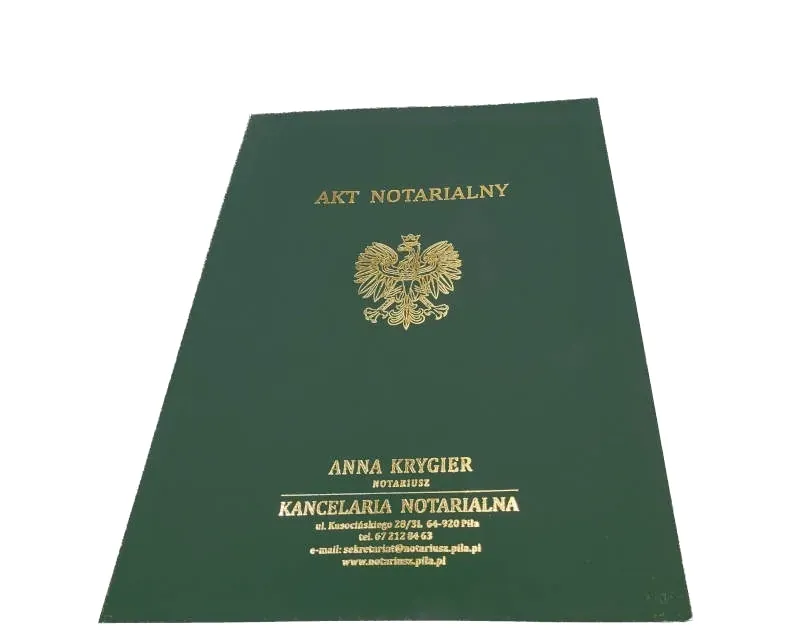
Draws up notarial deeds, including, among others:
- Sale agreements (contracts of sale)
- Donation agreements (deeds of gift)
- Marital property agreements
- Wills (testaments)
- Powers of attorney
- Voluntary submission to execution
- Acceptance of inheritance
- Division of inheritance
- Rejection of inheritance
- Renunciation of inheritance rights
- Draws up acts of succession certification
- Performs actions relating to the European Certificate of Succession
- Draws up certifications (authentications)
- Delivers statements
- Draws up minutes (protocols)
- Draws up protests of bills of exchange and cheques
- Accepts for safekeeping: money, securities, documents, and data on IT storage media (as referred to in regulations on the computerization of entities performing public tasks)
- Draws up excerpts, copies, and extracts of documents
- Draws up drafts of deeds, statements, and other documents at the request of the parties
- Files applications for entry in the Land and Mortgage Register along with documents constituting the basis for the entry
- Performs other acts resulting from separate regulations